Are Online Jigsaw Puzzles Good for Seniors?
A practical look at online jigsaw puzzles for older adults — the real benefits, the honest limits, accessibility features that matter, and how to set them up for an easy, enjoyable experience.
4 min read
In this Article
Jigsaw puzzles have long been a favorite pastime for older adults, and for good reason — they're absorbing, satisfying, and a nice way to spend a quiet afternoon. The online versions add some genuine conveniences for seniors, though they're not automatically better than the cardboard kind. Here's an honest look at where they help and where they don't.
The real benefits for older adults
No small pieces to lose. This is the big one. Physical puzzles mean tiny pieces that fall on the floor, slide under the couch, or go missing entirely — frustrating for anyone, more so with reduced dexterity or eyesight. Online, nothing gets lost and nothing needs picking up.
Adjustable difficulty. You can set the piece count to whatever feels right. A 50-piece puzzle is gentle and finishable; you can work up from there. No need to commit to a 1,000-piece box that turns into a chore.
No setup, no cleanup, no space needed. No clearing the dining table for a week. Open it, play, close it — the puzzle is exactly where you left it next time.
Zoom in. On a screen you can enlarge the image and the pieces, which helps when small print or fine detail is hard to see.
Something to share. A grandparent and a grandchild can play the same custom puzzle from different cities, each on their own device.
An honest word on "brain benefits"
You'll see a lot of claims that puzzles prevent cognitive decline or stave off dementia. The honest version: puzzles are a good, engaging mental activity, and staying mentally active is genuinely worthwhile — but the evidence doesn't support puzzles as a medical treatment or a guarantee against decline. Enjoy them because they're enjoyable and keep the mind engaged, not because a box promised to protect your memory.
We wrote more about what the research actually says in do jigsaw puzzles really help your brain.
The honest limits
Online puzzles aren't for everyone. Some older adults simply prefer the feel of physical pieces, and that's completely valid — there's a tactile satisfaction a screen can't replicate. Others find screens tiring or fiddly. If that's the case, a physical puzzle is the better choice, and you can still order a custom photo puzzle to ship.
There's also a small learning curve: on a screen you rotate and drag pieces with a mouse or finger, which takes a few minutes to get used to.
Setting it up for an easy experience
If you're introducing an older relative to online puzzles, a few things make it smoother:
- Start with a low piece count. 50 pieces or fewer. Finishing an easy one builds confidence; abandoning a hard one kills interest.
- Use a clear, bright image with good contrast. Avoid dark or busy photos.
- Play on the biggest screen available — a tablet or computer beats a phone for comfort.
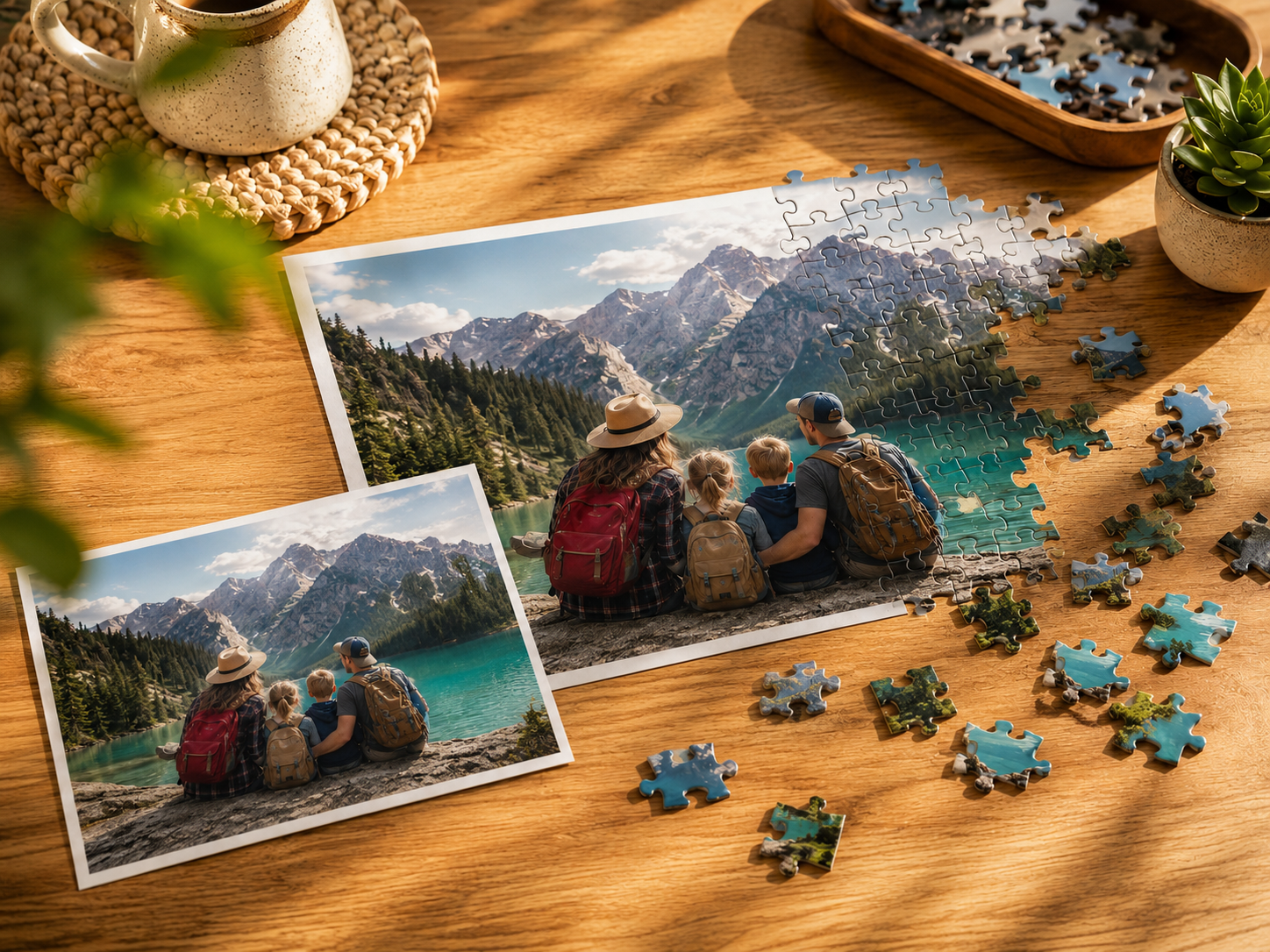
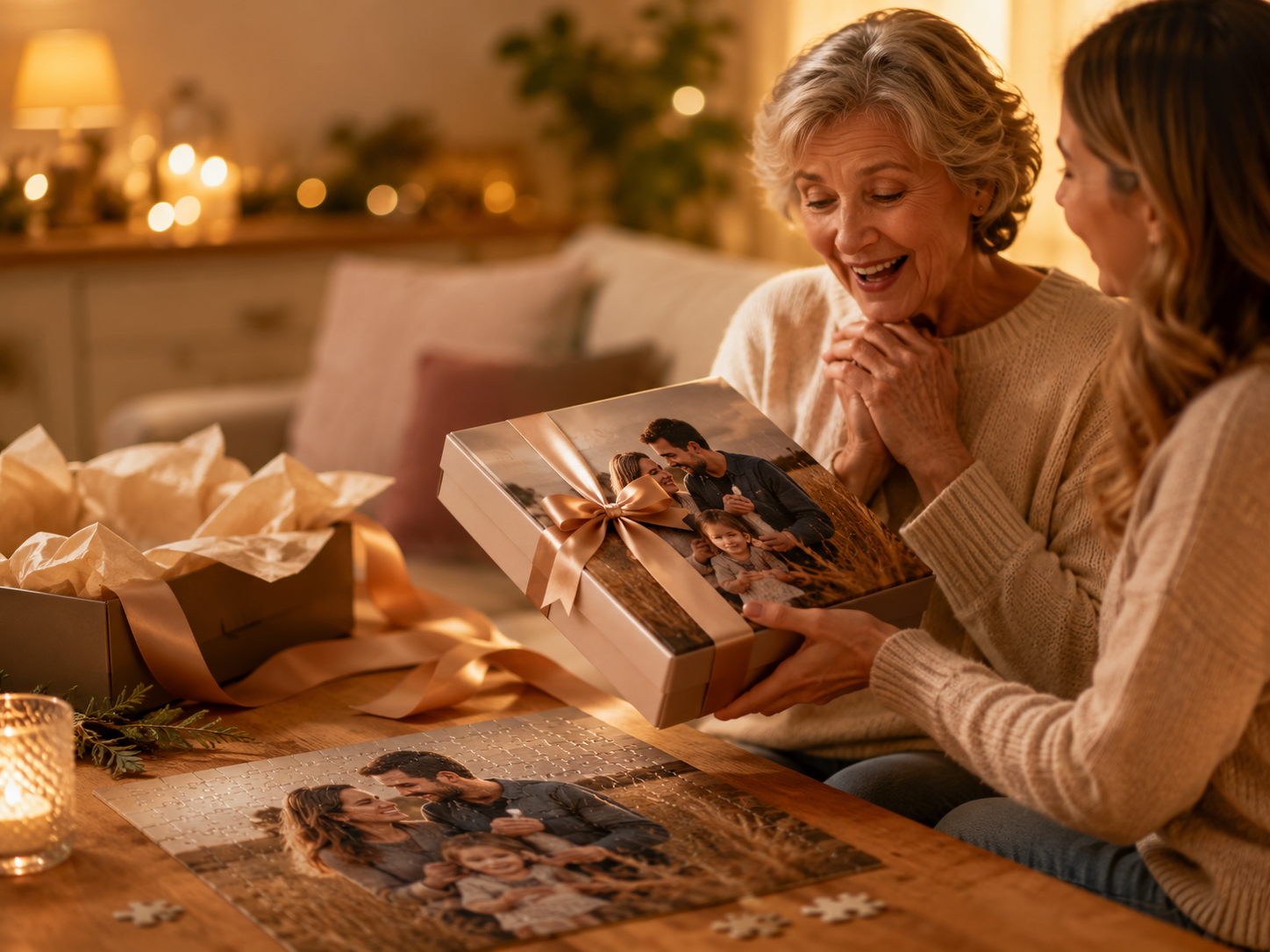
- Make it personal. A puzzle of the grandkids or an old family photo is far more engaging than a generic image. You can turn any photo into a puzzle and set an easy piece count.
- Sit with them the first time. Show them how to drag and rotate pieces, then let them go.
FAQ
Are online jigsaw puzzles good for seniors?
They can be a great fit — no lost pieces, no cleanup, adjustable difficulty, and the ability to zoom in. But some older adults prefer physical pieces, which is equally valid.
What piece count is best for an older beginner?
Start low, around 50 pieces or fewer. Finishing an easy puzzle is more encouraging than struggling with a large one. Increase gradually as it gets comfortable.
Do puzzles prevent dementia or memory loss?
There's no solid evidence that puzzles prevent cognitive decline. They're a good, engaging mental activity worth doing for enjoyment and mental stimulation — not as a medical treatment.
Can a grandparent and grandchild play the same puzzle?
Yes. A custom puzzle can be shared by link, and each person plays it on their own device, even from different cities.
Try an Easy One
Start with a low piece count and a familiar photo.
This article is for general information and isn't medical advice. If you have concerns about memory or cognition, talk to a doctor.