Jigsaw Puzzles for Kids: An Age-by-Age Guide
How many pieces should a puzzle have for a toddler, preschooler, or older child? A practical age-by-age guide to picking puzzles kids will actually finish — plus how to make custom ones.
4 min read
In this Article
The fastest way to put a kid off puzzles is handing them one that's too hard. The second fastest is one that's too easy. Getting the difficulty roughly right for their age is most of the battle — after that, they'll happily do the same puzzle twenty times.
Here's a rough age-by-age guide. Kids vary a lot, so treat these as starting points, not rules.
Ages 1–2: Chunky and simple
At this age it's less "puzzle" and more "does this shape go in this hole." Big chunky pieces, 2 to 4 of them, often with knobs to grab. The goal is the satisfying click of a piece going in, not a challenge.
Keep it to single, recognizable objects — one animal, one vehicle, one face.
Ages 3–4: First real jigsaws
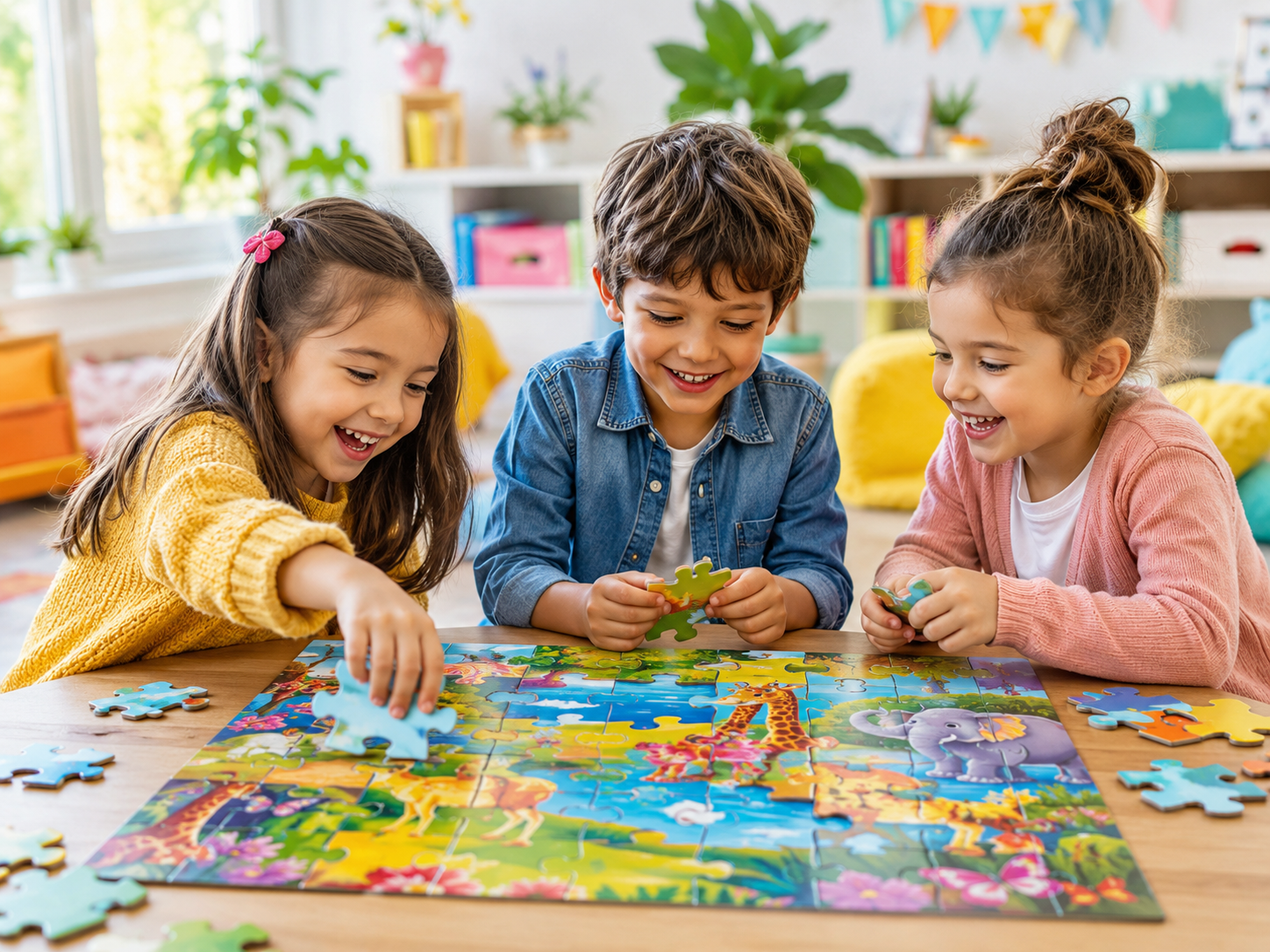
This is where actual jigsaw puzzles start to click. Think 4 to 12 pieces, building up toward 24 by age four. Bright, clear images they recognize — animals, characters, vehicles — hold their attention far better than abstract scenes.
A win at this age is finishing it themselves. Pick something easy enough that they get the payoff without needing you to rescue them.
Ages 5–6: Building confidence
Most kids in this range handle 24 to 48 pieces comfortably, and start reaching for 50–100 toward the older end. They can now do edges-first if you show them, and they enjoy a puzzle that takes more than one sitting.
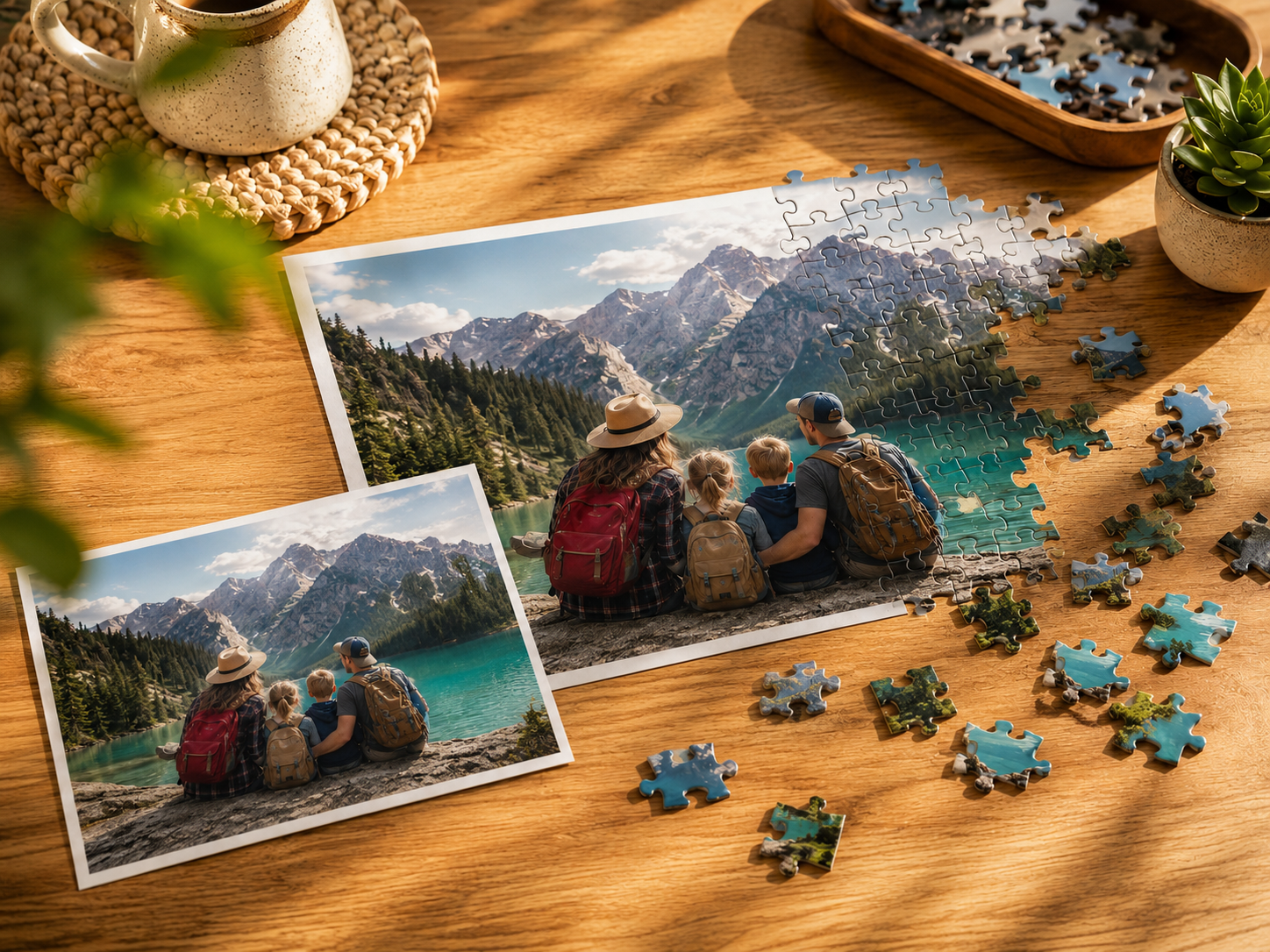
This is a great age for a custom puzzle of something they care about — their own drawing, a photo of their pet, a picture from a trip.
Ages 7–9: Real puzzlers
Now they can take on 100 to 300 pieces and stick with it. They understand strategy — sorting, sections, working from the edges in. Puzzles with more detail and less obvious imagery start to feel rewarding rather than frustrating.
Ages 10+: Approaching adult puzzles
By this point a lot of kids can handle 300 to 500+ pieces, and the ceiling is mostly patience and interest, not ability. They can do the same puzzles adults do.
Quick reference
| Age | Piece count |
|---|---|
| 1–2 | 2–4 (chunky) |
| 3–4 | 4–24 |
| 5–6 | 24–100 |
| 7–9 | 100–300 |
| 10+ | 300–500+ |
For a fuller breakdown across ages and settings, see our piece count guide.
Why custom puzzles work well for kids
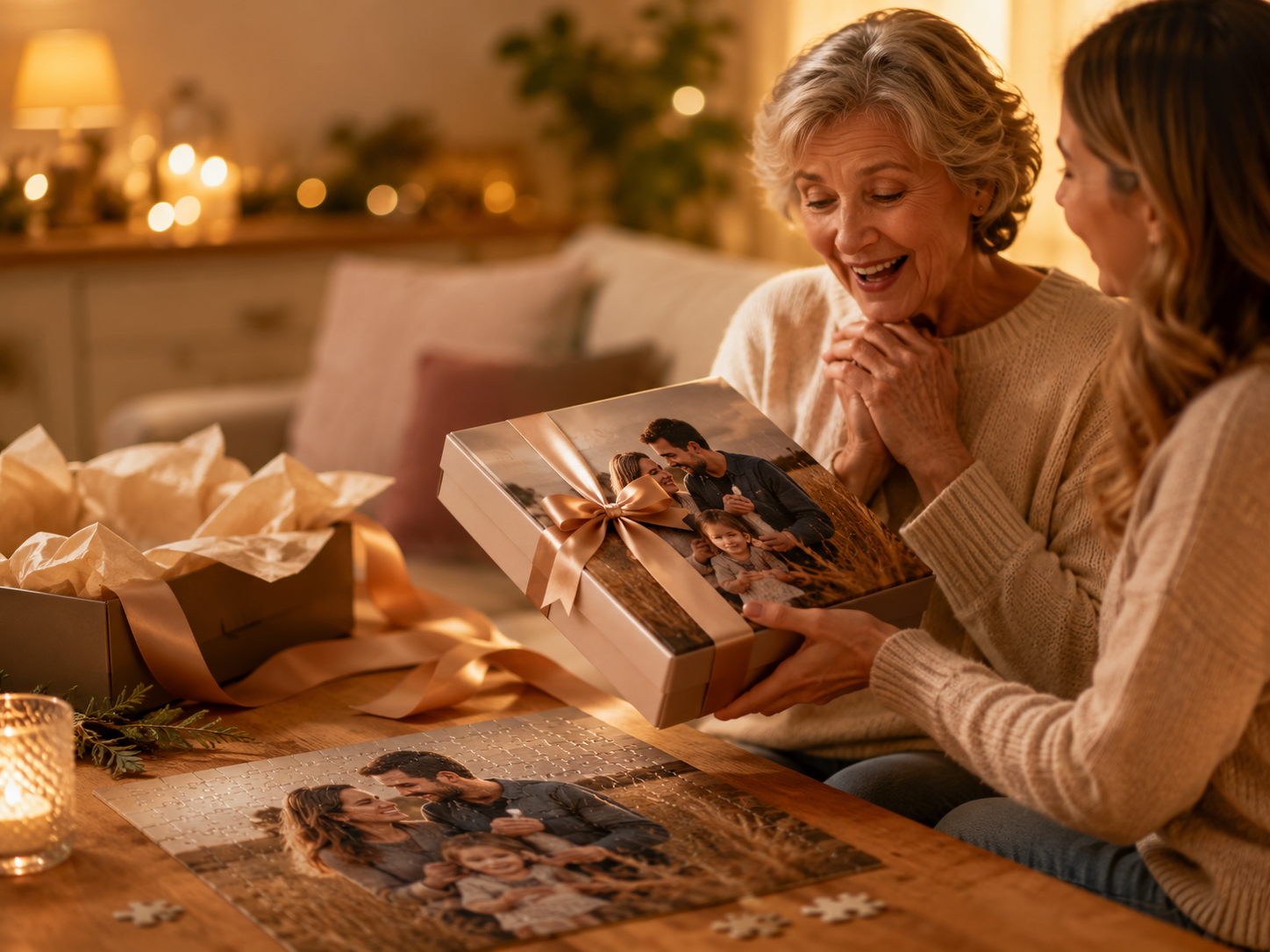
Kids engage far more with images they recognize and care about. A puzzle of their own dog, a photo from their birthday, or a scan of a drawing they made lands differently than a generic cartoon.
Online, this is easy to do: you can make a puzzle from a photo and set the piece count to match their age, then bump it up as they get better. Starting at 24 pieces and working toward 100 over a year gives them a visible sense of leveling up — and you don't have to buy a new box each time.
A few practical notes for puzzling with younger kids online:
- Lower the piece count. Better to have them finish an easy one than abandon a hard one.
- Use a clear, bright image. Busy or dark photos are harder for little eyes.
- Sit with them the first few times. Show them edges-first; then let them run with it.
FAQ
How many pieces should a puzzle have for a 3-year-old?
Around 4 to 12 pieces, working up toward 24 by age four. Bright, recognizable images hold their attention best.
What piece count is right for a 6-year-old?
Most 6-year-olds handle 24 to 48 pieces comfortably, with some reaching for 50–100. It's a good age to introduce edges-first sorting.
Are online puzzles good for kids?
They can be, especially because you can set the piece count to match their level and increase it as they improve — without buying a new puzzle each time. Keep sessions short and the image clear.
Can I make a puzzle from my child's drawing or photo?
Yes. You can turn a photo of a drawing, a pet, or a family moment into a puzzle and set an age-appropriate piece count.
Make One for Your Kid
Pick a photo they'll recognize, set an easy piece count, and let them at it.